

test to ensure jQuery for header loads

El Niño Resources for Superintendents

Wet, cloudy El Niño winters are hard on turf. Here is what you can do about it, how to explain it to golfers, boards and owners, and where to find help.
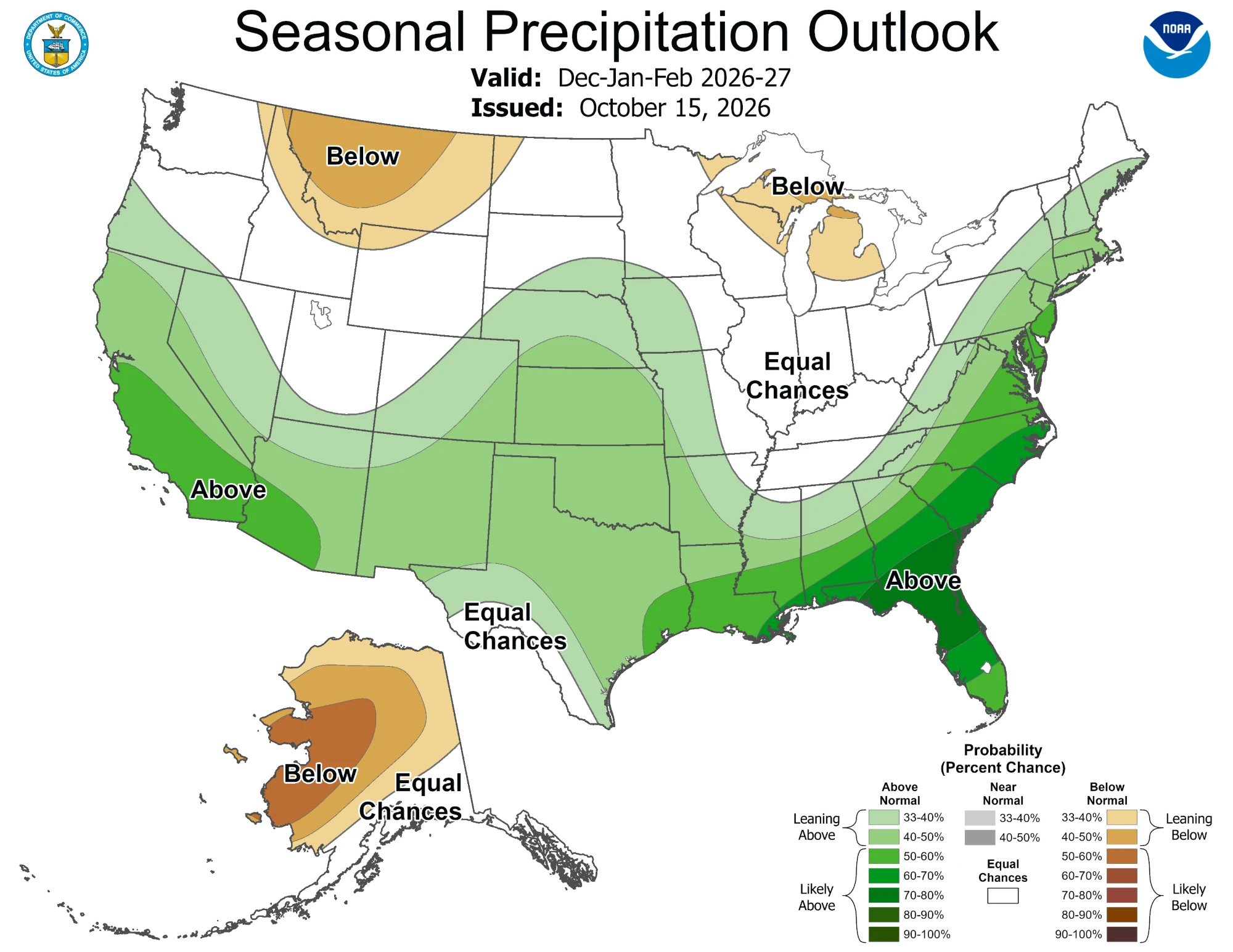
NOAA seasonal precipitation outlook map for December 2026 through February 2027, showing the highest chance of above-normal precipitation across Florida and the Southeast coast

NOAA Seasonal Precipitation Outlook for December to February 2026–27, issued Oct. 15, 2026. Image: NOAA

Outlook for this winter

El Niño is strong this year. NOAA’s Climate Prediction Center has an El Niño Advisory in effect and expects a strong to very strong event to continue through January to March 2027. NOAA’s seasonal outlook favors wetter than average conditions across the southern U.S. and the East Coast, including Florida.*

*Outlook information was pulled from NOAA on Nov. 20, 2026. Outlooks update monthly, so see NOAA’s 2026–27 U.S. Winter Outlook and the Climate Prediction Center for the latest.

Tips for managing turf through an El Niño winter

  • Raise mowing heights, or skip mowing greens some days

    Slower green speeds are a fair short-term trade-off. Lower heights gradually once sunny days return.

  • Vent greens with small tines

    Monthly is the minimum in a normal winter. Some facilities vent weekly to relieve compaction and get oxygen into saturated soil.

  • Adjust your fungicide program and add plant protectants

    Pythium, large patch and leaf spot are the diseases most often reported. Budget for higher fungicide use than a normal winter.

  • Go cart path only when soils are saturated

    Expect more courses than usual to do the same, and tell golfers early.

  • Close tees to let them heal

    Restrict cart traffic on weak areas as well.

  • Topdress tees lightly with green sand

    It protects crowns, fills divots and masks discoloration.

  • Topdress fairways to cut down on mud balls

    It reduces plugged lies and improves surface firmness. It is costly, so plan for it in the budget.

  • Switch to walk spreading when equipment cannot go out

    Walk spread fertility on traffic areas and tees, and keep heavy sprayers and spreaders off saturated turf. It takes more labor but protects the surface.

  • Plan for weeks when irrigation cannot run

    Products normally applied through irrigation, such as wetting agents and nutrition, may not go out. Have another application method ready.

  • Condition turf in the summer and fall

    Topdress, verticut and fertilize during the growing season. Turf that goes into October weak has a hard time recovering.

  • Mark the trouble spots now

    Trees, poor airflow and shade hurt most in a winter like this. Note them while they are obvious, and use them to plan work afterward.

Talking points for golfers, boards and owners

Plain-language points you can adapt when you explain conditions to the people who use and fund your course.

Why the course looks different

  • “Winter is the slow season for warm-season grass. In South Florida, cool temperatures alone hold growth to roughly 30 to 40 percent of its potential in January and February, and an El Niño winter pushes that lower.”
  • “Cloudy weather cuts the light the grass needs to grow, and fertilizer and water cannot make up for it. Slow-growing turf is slow to recover from divots and traffic.”
  • “Florida’s water table is shallow, so heavy rain leaves soil saturated and short on oxygen. Roots suffer and disease follows.”

How are we managing it?

  • “We raised mowing heights to protect the plant. Greens will be slower for a while, but a small change matters: 0.025 inch is about half the thickness of a dime.”
  • “Cart path only days protect turf on saturated soil. They are temporary and get the course back in shape sooner.”
  • “Closed tees and extra topdressing give worn areas a chance to recover.”

Will this impact the budget?

  • “Disease pressure rises in cloudy, wet weather, and a fungicide program that worked in a normal winter can fall short.”
  • “Wet soils break down preemergence herbicides faster, and treating weeds quickly costs more.”
  • “Equipment too heavy for saturated turf means work done by hand. Topdressing fairways adds cost too.”

Where to go next

El Niño winters are hard on turf and on the people who care for it. You do not have to work through one alone. Your regional representative and your chapter are a call away, and the resources below go deeper on specific topics.

Sources

Last reviewed Nov. 20, 2026